> For the complete documentation index, see [llms.txt](https://docs.gmetri.com/llms.txt). Markdown versions of documentation pages are available by appending `.md` to page URLs; this page is available as [Markdown](https://docs.gmetri.com/metaverse/publishing/embed/android-embed.md).
# Android Embed
### Implementing Chrome Custom Tabs for GMetri Experiences[](https://www.gmetri.com/docs/platform/publish/embed/android-embed#implementing-chrome-custom-tabs-for-gmetri-experiences)
To run GMetri experiences inside android apps, we recommend an implementation of Chrome Custom Tabs API. Detailed information on how to setup an android experience with Chrome Custom Tabs can be found in this [experience](https://github.com/gmetrixr/chrome-custom-tabs/).
Also checkout this [link ](/metaverse/publishing/authentication/token.md#creating-jwt-tokens-in-an-android-app)if you need authentication on GMetri experiences within your android app.
In your android experience add the required dependencies for Chrome Custom Tabs. Following is an example of gradle build dependencies:
```groovy
dependencies {
implementation fileTree(dir: 'libs', include: ['*.jar'])
implementation 'com.android.support:appcompat-v7:26.1.0'
implementation 'com.android.support:customtabs:26.1.0'
}
```
Information on how to install dependencies for other build systems are is in the links below:
From this [experience](https://github.com/gmetrixr/chrome-custom-tabs/) , copy 2 files: `ChromeCustomTabs.java` and `ServiceConnectionCallback.java` into your android experience. These files together provide the interface for chrome custom tabs to run GMetri experiences.
The className `ChromeCustomTabs.java` implements 2 public methods:
1. `initialize(String url, Context context)`
2. `launch()`
Arguments:
1. **url** - Url of the experience
2. **context** - Context of your activity (`this`)
An example implementation of the above classes:
```java
ChromeCustomTabsJwt chromeCustomTabs = new ChromeCustomTabsJwt();
chromeCustomTabs = new ChromeCustomTabs();
String url = "https://view.gmetri.com/v4/game/safehands_v2";
chromeCustomTabs.initialize(url, this);
chromeCustomTabs.launch();
```
### More About Chrome Custom Tabs
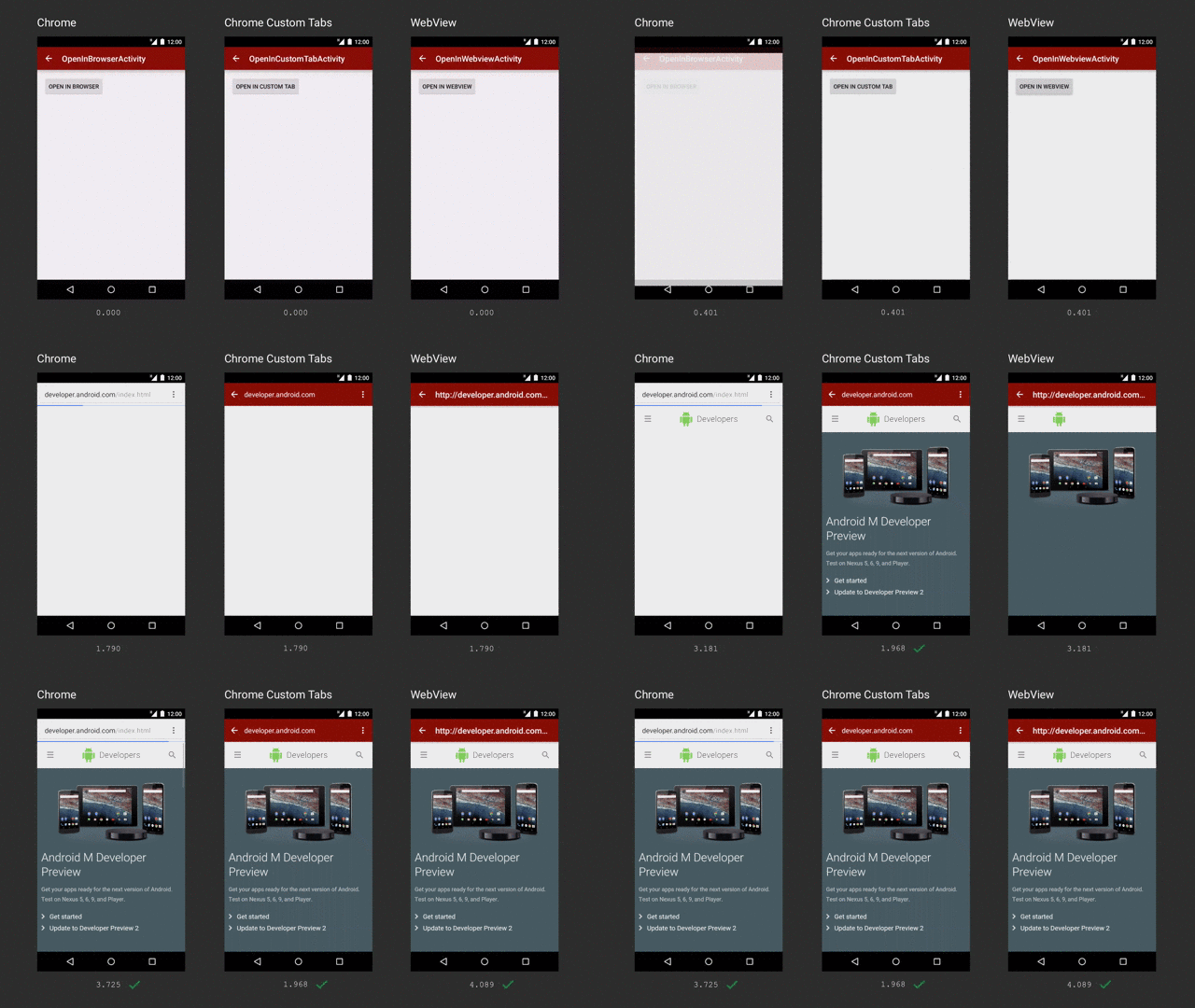
* To enable GMetri XR experiences within an Android app, the app needs to implement the Chrome CustomTabs API as described in this [article](https://developer.chrome.com/multidevice/android/customtabs/).
* Chrome CustomTabs remove the restrictions imposed by WebViews on serving XR content. While WebViews don't share their state with the Chrome browser, ChromeCustomTabs are fully embeddable browser extensions capable of doing anything that a native Chrome browser can do.
* Chrome CustomTabs give apps higher control over web experience and make transitions between native and web content seamless without having to resort to a WebView.
---
# Agent Instructions
This documentation is published with GitBook. GitBook is the documentation platform designed so that both humans and AI agents can read, navigate, and reason over technical content effectively. Learn more at gitbook.com.
## Querying This Documentation
If you need additional information that is not directly available in this page, you can query the documentation by asking a question.
Perform an HTTP GET request on the following URL with the `ask` and `goal` query parameters:
```
GET https://docs.gmetri.com/metaverse/publishing/embed/android-embed.md?ask=&goal=
```
`ask` is the immediate question: it should be specific, self-contained, and written in natural language.
`goal` is what the user is ultimately trying to achieve, the reason they need the answer. Sharing it helps GitBook give you a better, more relevant answer. A goal is most helpful when it describes the outcome the user wants rather than restating the question. For example, with `ask=how do I create an API token`, a goal like `automate deployments from our CI pipeline` lets GitBook tailor the answer to that use case.
The response will contain a direct answer to the question and relevant excerpts and sources from the documentation.
Use this mechanism when the answer is not explicitly present in the current page, you need clarification or additional context, or you want to retrieve related documentation sections.